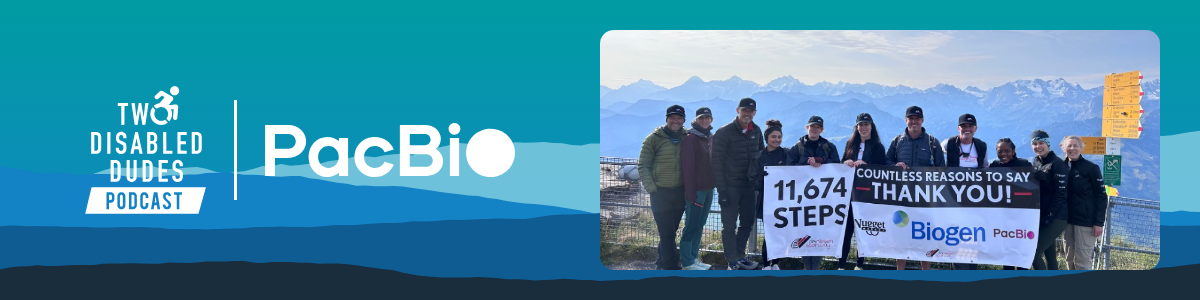
Sean Baumstark and Kyle Bryant, hosts of the Two Disabled Dudes podcast, are not ones to back down from a challenge. The pair, who both live with the neuromuscular disease Friedreich’s ataxia (FA), first took on Race Across America, widely recognized as the world’s toughest bike race, and later rode the world’s highest paved road in India. While training for that second ride, Sean began thinking a third adventure was in order. A quick glimpse of footage of a staircase clinging to the side of a mountain high above the valley floor sent him searching online. That search led him to the Niesen Stairway in the Swiss Alps.
With 11,674 steps, the Niesen Stairway holds the Guinness World Record as the longest stairway in the world. For Sean, who now uses a walker full time, these stairs represent what he calls “the ultimate challenge.” This year, he set out to climb every one of them.
Why Sean took on the Niesen Stairway with FA
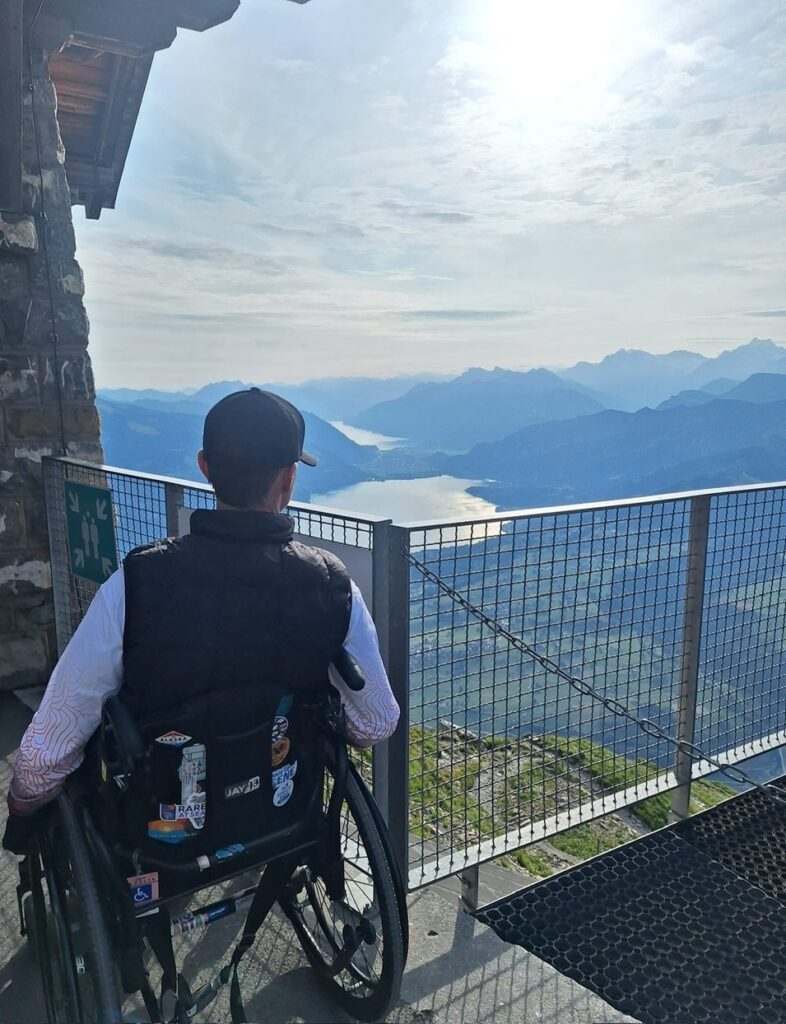
The Niesen Stairway climbs the face of a pyramid-shaped peak above Lake Thun in Switzerland, running alongside a funicular that carries visitors to a summit lookout just under 8,000 feet above sea level. Over roughly 3.4 kilometers, the route gains about 5,000 feet in elevation. Some stretches are level, evenly spaced, and lined with a handrail, while others are dirt, wood, or rock built into the mountainside over about a century. No map of step dimensions exists, and in places the stairs rise high above the ground below.
The stairs serve as a maintenance and emergency rescue route and remain closed to the public, opening only for authorized private events such as an annual stair run. Because the run is a timed relay, Sean instead worked with the company that operates the railway to rent access to the stairs overnight while the funicular was closed.
A third world-famous challenge and the triumph of reaching the top were only part of the appeal. Climbing stairs is one of the hardest things FA asks of Sean’s body, which made the longest stairway in the world a fitting way to show what careful training, preparation, and the right team can make possible.
“I want to be living proof that disability doesn’t limit adventures,” Sean said on his podcast. “It just causes us to redefine them.”
Friedreich’s ataxia and the FXN repeat expansion
Friedreich’s ataxia is a rare, inherited neuromuscular condition that progressively affects coordination, balance, and muscle control. Most cases are caused by an expansion of a GAA trinucleotide repeat in the FXN gene, which reduces production of frataxin, a protein important for mitochondrial function. Expanded alleles can stretch to hundreds or more than a thousand repeat copies, which has made them challenging to size and sequence accurately with many conventional methods.
For Sean, the climb was a way to bring that science into a more human light.
“This was never just about climbing 11,674 steps. It was about showing that disability doesn’t define what’s possible.”
He also described the effort as a chance to raise awareness of FA and the broader rare disease community and to challenge the way the world sees rare disease.
How teamwork helped Sean climb 11,674 steps
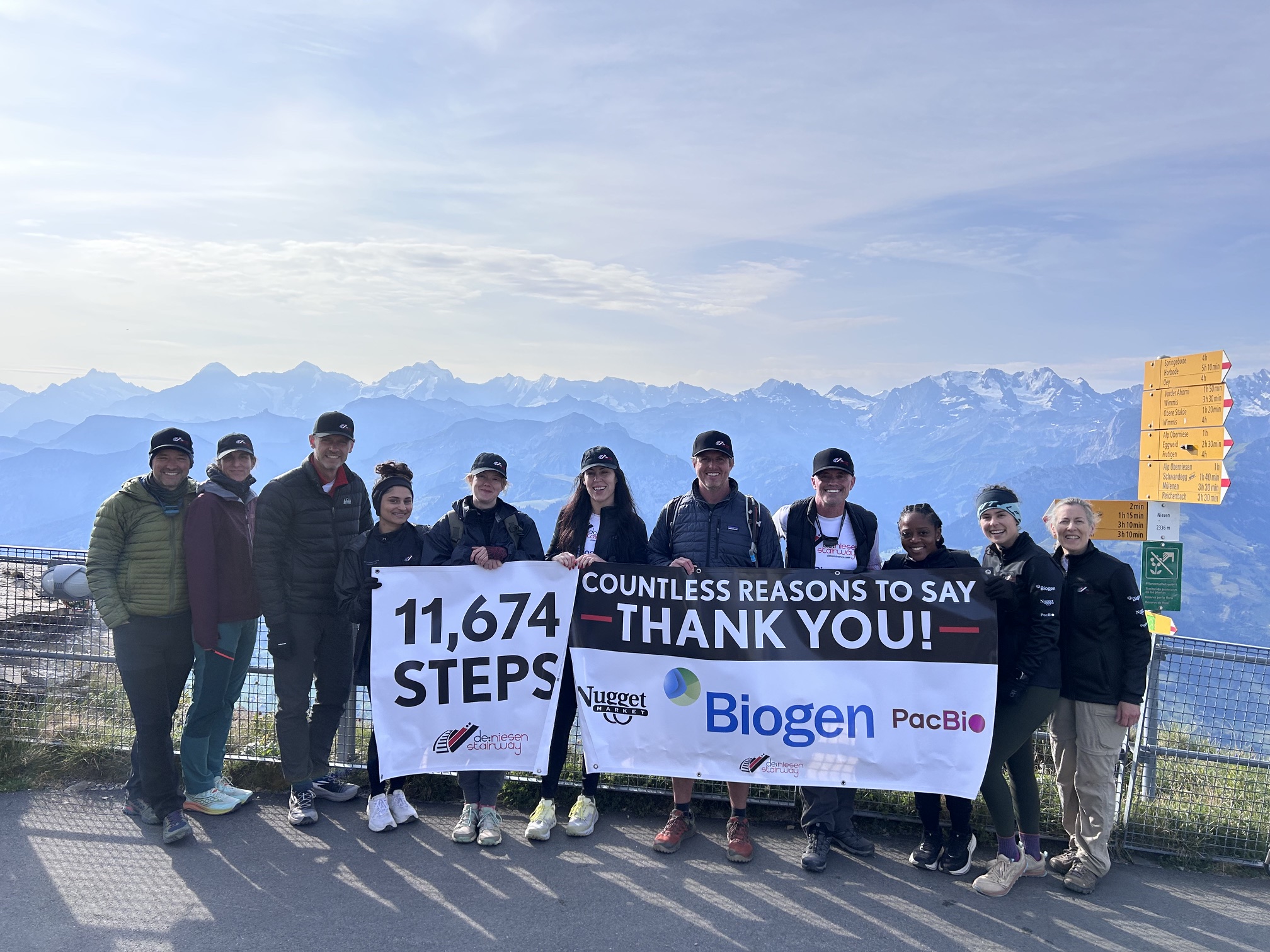
Sean trained for 26 weeks on stair climbers and in parking garage stairwells, adding 500 steps every two weeks until he could complete 6,000 steps in a single session. Sean also knew from the start that he could not take on a climb of this scale alone. A team of 10 planned and trained alongside him, made up of longtime friends, coworkers, a Swiss scientist working in the FA field, and a local mother of a child with a rare disease who can see the Niesen from her kitchen window. Together they worked out how to keep him steady where the railings disappeared. On the climb, teammates wore metal pack frames that Sean could hold onto, and he took every step on his own two feet.
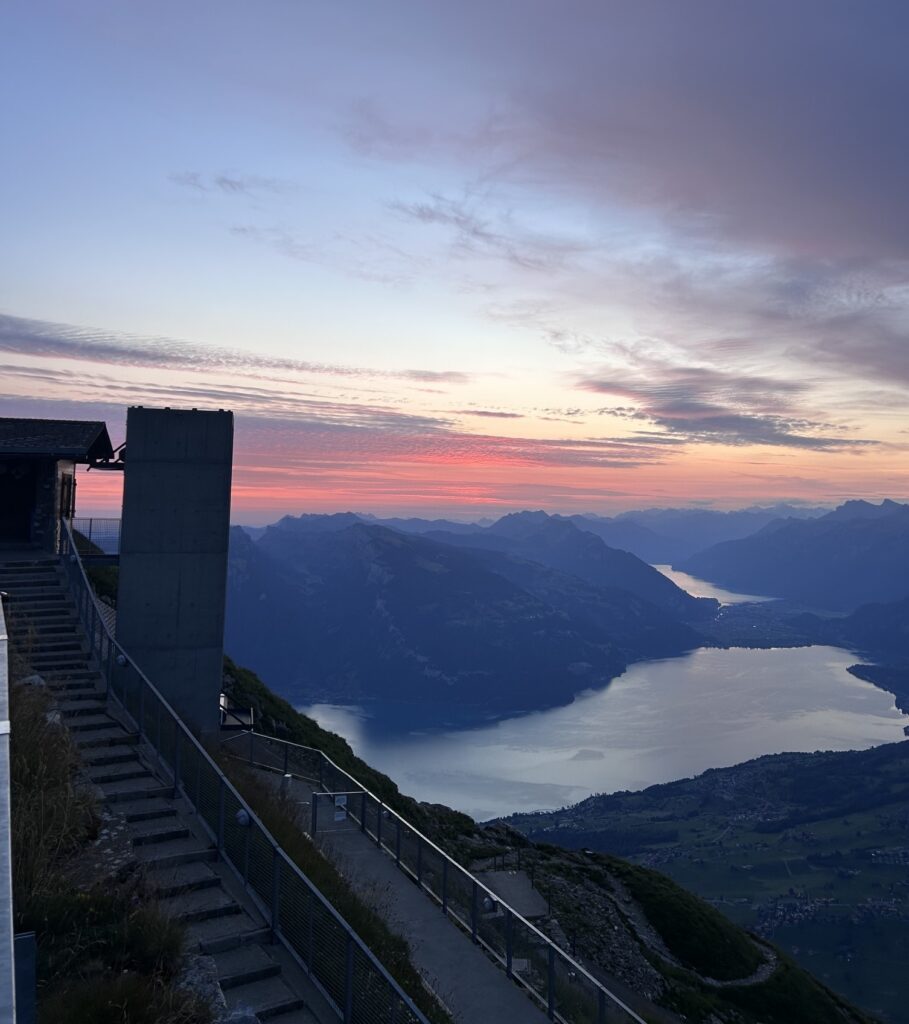
Reflecting after the climb, Sean described conditions that tested everyone on the team. “The staircase was relentlessly steep and the steps were incredibly narrow. At times we were suspended probably 100 feet above ground in cold winds and pitch-black sky.” The group started at midnight on two consecutive nights, already tired from the outset, and every step required complete focus.
The team reached the summit by moving as one.
“When one stopped, we all waited,” Sean said, crediting teammates who “sacrificed, pushed, pulled, carried, encouraged, laughed, and believed.” In his words, they made it to the top “because everyone knew the objective and were willing to sacrifice to help me complete it.”
How De:terminence supports people with disabilities
The climb also served as a fundraiser for De:terminence, the nonprofit Sean launched shortly after his diagnosis. The organization’s mission is to help people experience the beauty and power of physical achievement, from riding a bike across town or across the country to running a race or climbing a mountain. When a goal can’t be reached the way it is traditionally done, De:terminence looks for ways to make it possible through adaptive equipment and the support of able-bodied teammates.
The Niesen climb reflected that model on a large scale. Supported by donors and sponsors, the effort raised $32,911 for the organization’s work. Sean has said that success was never defined by standing on the summit, but by giving everything he had and encouraging others along the way. “My effort to even try might be somebody else’s permission to try something beyond their limitations,” he said on the podcast.
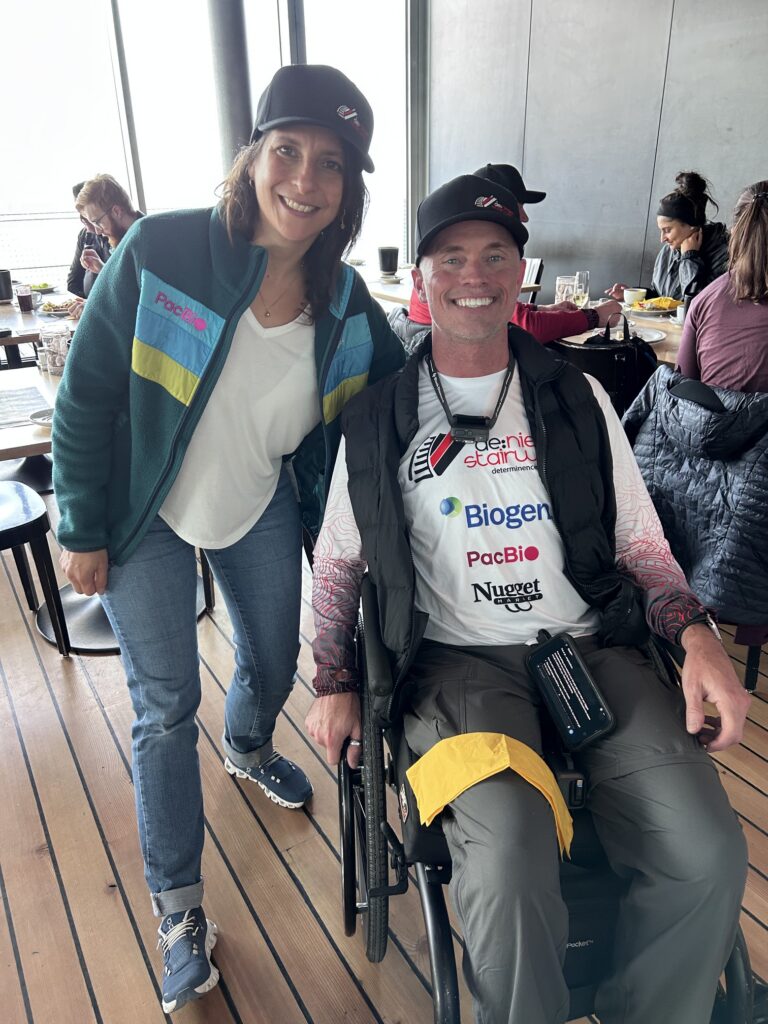
Continuing to chase rare disease challenges
With the summit behind them, Sean and his team are already looking ahead to the next challenge.
“The Swiss Alps are behind us, but we aren’t done,” he said. “We’ll continue chasing bold challenges, telling meaningful stories, and proving that determination has the power to change lives.”
His closing thought captures the spirit of the entire climb. “Determination isn’t something you find. It’s something you choose again and again.”
To support future adventures, visit De:terminence, subscribe to the Two Disabled Dudes podcast, and listen to episodes 291 and 301 for the full story behind the climb. The Niesen Stairway is not open to the public, and access requires prior authorization from Niesenbahn AG.
To learn more about how HiFi long-read sequencing can fully resolve repeat expansions like the one that causes FA and other rare neuromuscular diseases, explore our PureTarget technology page.