Blog
October 21, 2020
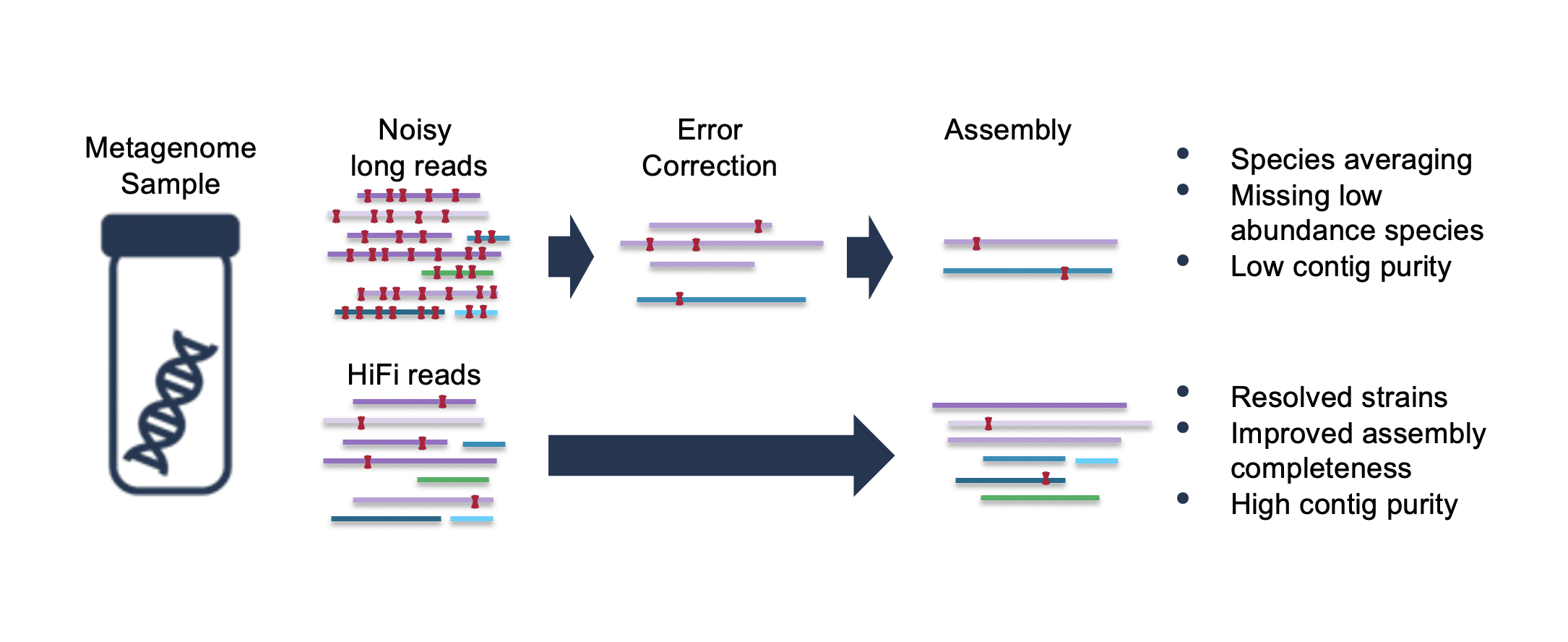
The HiFi Sequencing Advantage for Metagenome Assembly
Assembly and binning of metagenome data are the first steps in many metagenomics analysis pipelines, and with good reason. Metagenome assembled genomes (MAGs) and circularized MAGs (CMAGs) allow recovery of…

October 15, 2020
Pediatric Partnership Powered by PacBio Aims to Solve Difficult Rare Disease Cases
Kids have lots of questions. But even the world’s top scientists don’t have all the answers — especially when it comes to rare genetic disorders afflicting children. Our HiFi reads,…
October 8, 2020
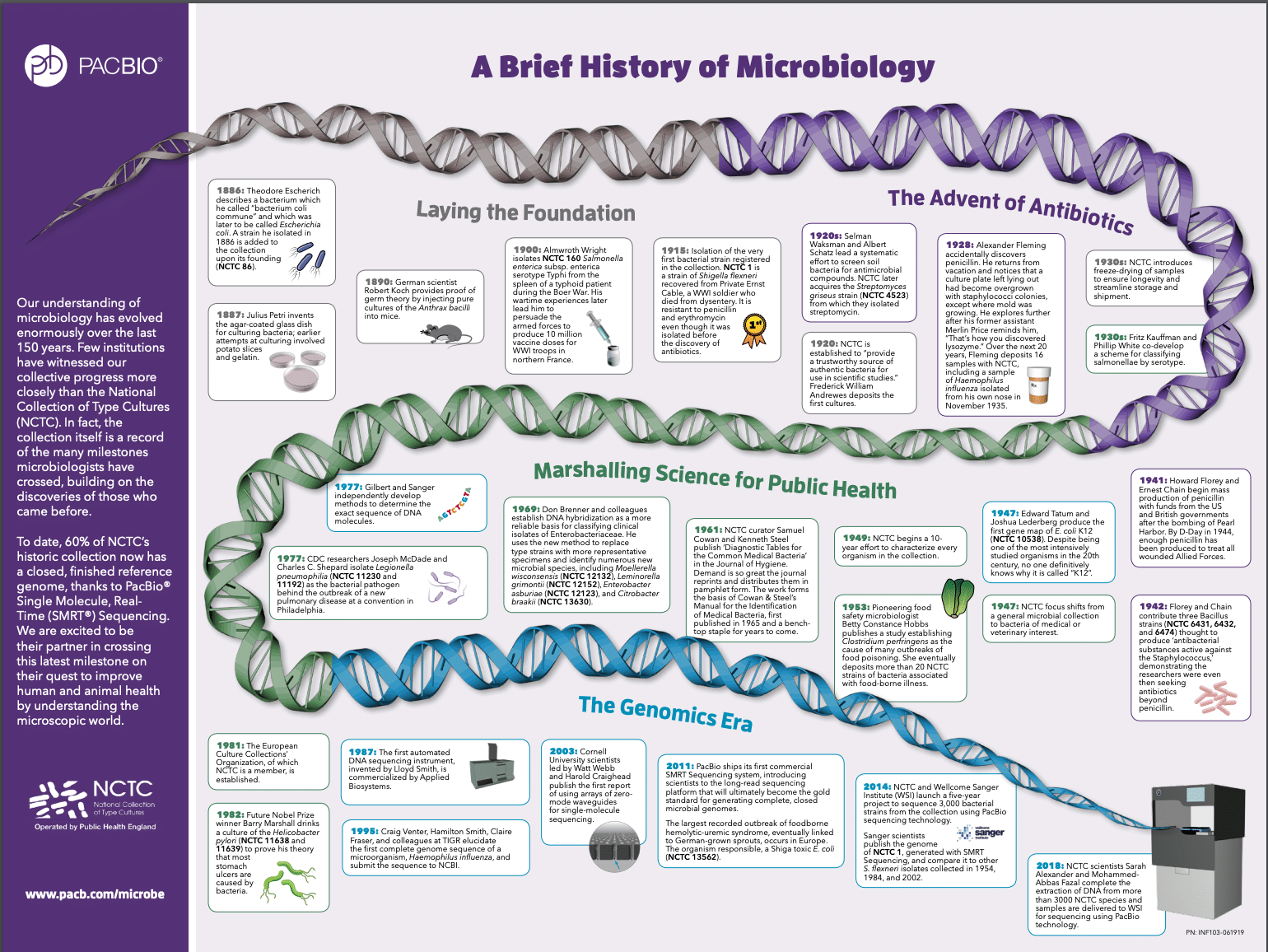
A Living Legacy of Microbiology Celebrates 100 Years
As the world faces an unprecedented pandemic caused by a novel coronavirus, the scientific spotlight has shone brightly on infectious disease research. And although interest in Public Health England’s (PHE)…

October 5, 2020
Meet the New Sequel IIe System: Delivering Fast & Affordable HiFi Sequencing
Still soaring from the success of last year’s launch of the award-winning Sequel II System, we’re excited to announce the next evolution of the instrument: the Sequel IIe System. This…

October 1, 2020
Webinar: Crops and Corvids get the Pangenome Treatment with HiFi Sequencing
Nearly gapless, reference-quality chromosome-level assemblies — in less than a day? Yes, it’s possible, thanks to the high accuracy and low computational needs of PacBio HiFi reads. Kevin Fengler, computational…
September 21, 2020
Checkmate, Chromosome 8: The First End-to-End Sequence of a Human Autosome
UPDATE: The paper is now available in Nature. Even in the field of genomics where new breakthroughs occur every few months, completion of the first-ever fully sequenced human autosome is…
September 16, 2020
Easy and Affordable: Full-Length 16S HiFi Sequencing with PacBio Service Providers
Analysis of 16S ribosomal RNA has been used for phylogenetics and identifying prokaryotes for decades. But just as scientists have had to refine the Linnaean taxonomy system based on genomic…
September 15, 2020
Now Available: Ultra-Low DNA Input Workflow for SMRT Sequencing
It’s one of the questions we hear most often from scientists working with small organisms: Is it possible to generate truly high-quality, long-read data from minuscule amounts of DNA? With…
September 9, 2020
High Quality HiFi Assemblers Open Up a Wide New World of Genomics Possibilities
With PacBio HiFi sequencing data now readily available for organisms of any size, many exciting results have been published featuring new de novo assembly methods optimized for highly accurate long…
August 31, 2020
Colombian SMRT Grant winners hope HiFi sequencing will help save critically endangered toads
Meet the ‘happy toad’ Atelopus laetissimus, a harlequin toad found on the slopes of the Sierra Nevada de Santa Marta mountains of Colombia. This toad is brightly colored, with an…

August 26, 2020
Pangenome of Soybean Generated to Capture Genomic Diversity
It has recently become apparent how important it is to sequence more than one individual to characterize the genomic variation within a species. This makes sense if you consider that…
August 19, 2020
A TAL Tale: PacBio Sequencing Helps Unravel Mechanisms of Plant Infection
How do bacteria manipulate plant biology to cause blight and rot? Why are some pathogen strains more virulent than others? How can we engineer resistant staple food crops? These are…
August 17, 2020
In Alabama, Scientists Use HiFi Data to Uncover the Genetic Cause of Rare Neurodevelopmental Disorders
UPDATE: This paper has now been published in HGG Advances from Cell Press In an exciting new preprint, scientists from the HudsonAlpha Institute for Biotechnology and the University of…
August 11, 2020
In precisionFDA Challenge, PacBio HiFi Reads Outperform Both Short Reads and Noisy Long Reads
In the recent precisionFDA Truth Challenge V2, which evaluated methods for variant calling in human genomes, approaches that use PacBio HiFi reads delivered the highest precision and recall in all…
August 6, 2020
“Murder Hornet” Genome Rapidly Assembled by USDA as Part of Real-Time Invasive Species Response Initiative
With a nickname like “murder hornet,” it’s no wonder the two-inch long Asian giant hornet (Vespa mandarinia) has caused a stir amongst those terrified of insect invasions. The wasps —…