Blog
This blog features voices from PacBio — and our partners and colleagues — discussing the latest research, publications, and updates about HiFi sequencing.
Blog
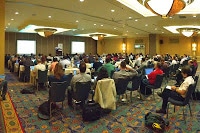
Event Recap: Fall User Group Meeting Presentations & Review
In September we were excited to have 100+ customers gather in Palo Alto, Calif., to discuss their use of Single Molecule, Real-Time (SMRT®) Sequencing and hear about what’s next for…

At Institute for Genome Sciences, Long Reads Offer New Path to Finished Genomes
The Genomics Resource Center (GRC) at the Institute for Genome Sciences (IGS) has a scientific pedigree and a sample-to-interpretation service commitment that place it in a league of its own….

Comparative Transcriptome Analysis: Insights from a Single SMRT Cell
In a new paper published in the journal Gene, scientists from Rutgers University and King’s College London report the use of a single SMRT® Cell to sequence and assemble more…
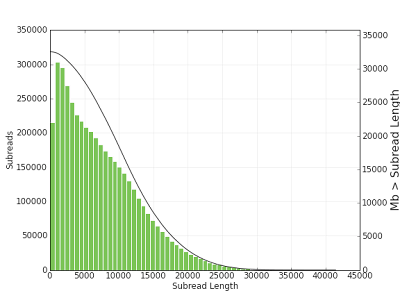
Data Release: Long-Read Shotgun Sequencing of a Human Genome
In order to help evaluate the utility of long, unbiased sequence reads for characterizing structural variation in the human genome using our recently released P5-C3 scaffolding sequencing chemistry, we have…
Stanford Team Finds Novel Transcripts Using Long-Read Isoform Sequencing
An advance online publication in Nature Biotechnology from Michael Snyder’s lab at Stanford University demonstrates the utility of long-read sequencing for assessing transcribed regions across the human genome. Long PacBio…

Resolving Complex Regions in the Human Genome: SMRT Sequencing Fills Major Mucin Gap
Scientists from University of North Carolina at Chapel Hill, Duke University, and other institutions have teamed up to sequence an important region of the human genome that has until now…

Characterizing Structural Variation in the Human Genome: ASHG 2013 Workshop and Presentations
We are excited to participate in the annual American Society of Human Genetics meeting again this year on October 22-26 in Boston, MA. With so many new PacBio® technology advances…
New Chemistry for PacBio RS II Provides Average 8.5 kb Read Lengths for Complex Genome Studies
Our R&D team has been focusing on chemistry improvements for the PacBio® RS II sequencer and today we are pleased to announce our newest reagent combination, the P5 DNA polymerase…

Genome Biology Paper Highlights Affordability and Scale of PacBio-Based Finished Microbial Genomes
A new paper released in Genome Biology on September 13 from lead author Sergey Koren at the National Biodefense Analysis and Countermeasures Center offers a thorough overview of SMRT® Sequencing…

Next Week’s ICG Meeting to Include Several SMRT Sequencing Talks
The International Conference on Genomics in the Americas (ICG), organized by BGI and UC Davis, is taking place on Sept 12-13 in Sacramento, CA. One of the keynote presentations in…

New Data Release: Arabidopsis Assembly Offers Glimpse of
De Novo SMRT Sequencing for Larger Genomes
Update 1/13/14: A new data release of Arabidopsis using P5-C3 chemistry is available Advances in our chemistries, throughput, and read length are pushing the envelope in the way we tackle…

Oklahoma Scientists Use SMRT Sequencing to Rescue Fungal Genome Assembly
Orpinomyces is found in cattle rumen. Scientists from Oklahoma State University and the University of Oklahoma teamed up with a sequencing service provider to study the genome of an anaerobic…
The Value of Finished Bacterial Genomes: A Microbiology Primer
Microbiologists have been at the forefront of genomics since Haemophilus influenzae became the first organism to have its full genome sequenced in 1995 using Sanger sequencing. Even with modern technology,…
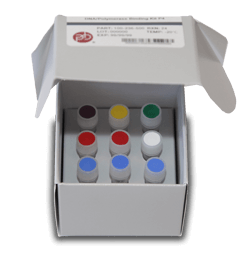
New DNA Polymerase P4 Delivers Higher-Quality Assemblies Using Fewer SMRT Cells
Pacific Biosciences is pleased to announce the introduction of DNA/Polymerase Binding Kit P4. This P4 enzyme has average read lengths of >4,300 bp when paired with the C2 sequencing chemistry…
Scientists Assess Error Modes in Sequencing Platforms and Find SMRT Sequencing ‘Least Biased’
A paper from scientists at the Broad Institute reports a rigorous study of bias across all major sequencing platforms. In “Characterizing and measuring bias in sequence data,” published in Genome…