Blog

September 4, 2019
Webinar: No-Amp Targeted Sequencing Yields Base-Level Resolution of Hard-to-Amplify Regions
Until recently, enriching for certain regions of the genome has been virtually impossible. Repeat expansions, extreme GC regions, and other genomic elements are very difficult to target using traditional enrichment…
August 30, 2019
From Parakeet to Potoo, International Consortium Releases 100 High-Quality Vertebrate Genomes
UPDATE (October 2020): A preprint of the vaquita reference genome has been published. With her distinctive dark eyeshadow, grey lipstick-like markings and delicate disposition, she was a natural film star….
August 21, 2019
New Initiative to Generate 5,000 High-Quality Microbial Genomes for Chinese Database
An ambitious project to sequence 5,000 microbial genomes was jointly initiated by a consortium of 10 institutions across China, including Nankai University, China CDC, Academy of Military Medical Science, Third Institute…
August 19, 2019
When Size Matters: Using SMRT Sequencing to Help Patients With Repeat Expansion Disorders
Patients with myotonic dystrophy type 1 (DM1) want to know their size — the size of the expansion of repeats of the unstable CTG sequences that cause the progressive deterioration…
August 15, 2019
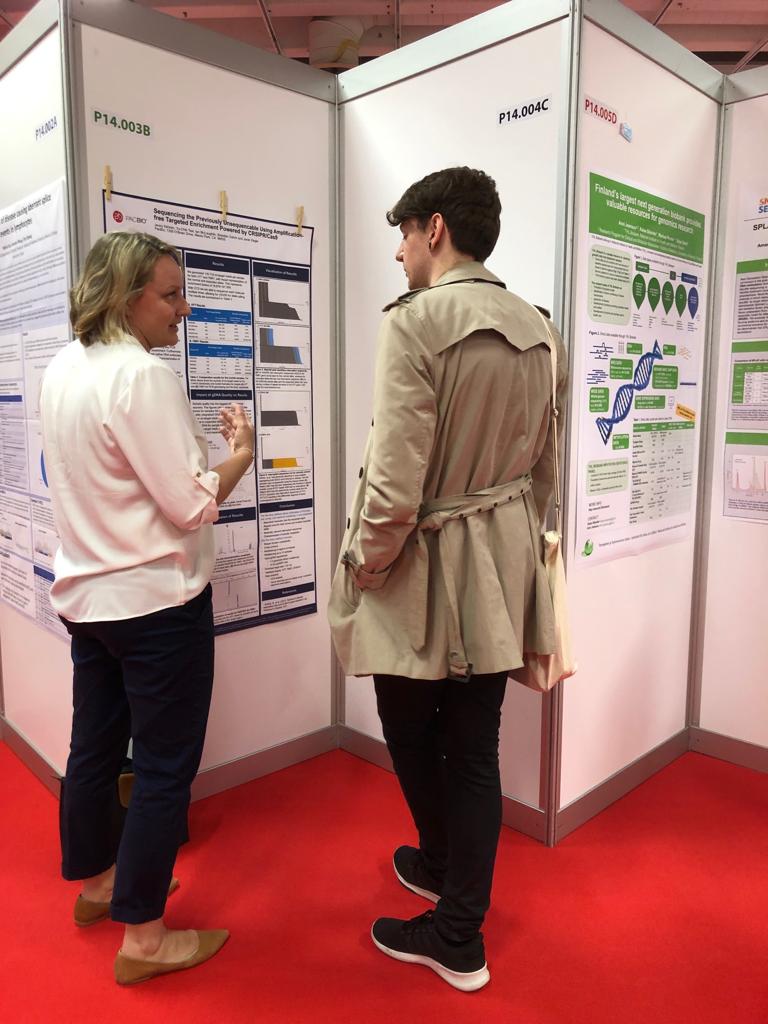
At ESHG, SMRT Sequencing Contributed to De Novo Assemblies, Structural Variant Discovery
The annual meeting of the European Society of Human Genetics — held last month in the sleek Swedish Exhibition & Congress Center in Gothenburg, Sweden — was a terrific assembly…
August 12, 2019
PacBio HiFi Reads: ‘Most Effective Stand-Alone Technology for de Novo Assembly’
UPDATE: The article is now published in the Annals of Human Genetics. A new preprint evaluates the utility of PacBio HiFi reads for assembly of a human genome. The…
August 7, 2019
SMRT Sequencing Helps Crack the Code of Elusive Centromeres
Crucial assembly sites and mitosis mediators, centromeres are central to every cell, but missing from even the most complete genome assemblies. Until now. In a PLOS Biology paper, Amanda Larracuente…
July 29, 2019
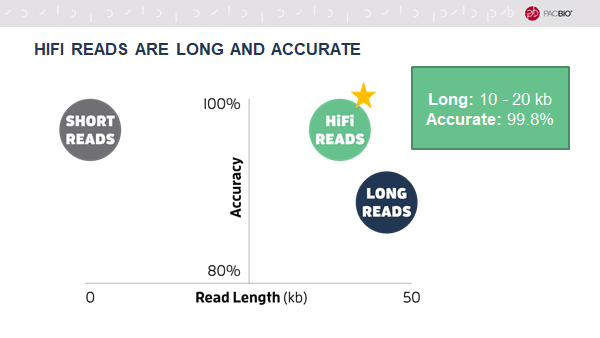
HiFi Reads Add Unparalleled Accuracy to the Long-Read Sequencing Arsenal
To enable better understanding of biology, sequencing data must be accurate and complete. This is especially true when seeking out variants and determining their implications. Luckily, technical and software improvements…
July 18, 2019
RNA Sequencing SMRT Grant Winner to Help Hone New Therapeutic Strategy in Acute Myeloid Leukemia
Variety is the spice of life, and one of the drivers of genetic variation is gene splicing. After a gene is transcribed, there are alternatively spliced transcripts that add even…
July 11, 2019
Sanger Scientists Test Sequel II System for Tree-of-Life Projects
Today we offer the final post in our blog miniseries about early access users’ experiences with the new Sequel II System. Shane McCarthy, a scientist at the University of Cambridge…
July 8, 2019
No-Amp Targeted Sequencing Used to Interrogate Disease-Associated Repeat Expansion
A new publication released in PLOS One from scientists at the Mayo Clinic offers a great look at our CRISPR/Cas9-based, amplification-free targeted sequencing method and its utility for accurately sizing…
July 1, 2019
Setting a New Gold Standard in Strain Sequencing: Webinar Describes Cannabis Pan-Genome Project
What makes one strain of cannabis have potent psychoactive properties, and another more suitable for medicinal purposes? Scientists are several steps closer to figuring it all out, thanks to PacBio…

June 26, 2019
Application Updates: Introducing Iso-Seq Express for Faster RNA Sequencing
Seeking to sequence and characterize entire transcriptomes in one go? Our new Iso-Seq protocol and reverse-transcriptase PCR kit makes it easier, speedier and cheaper. Run on the new Sequel II…
June 20, 2019
At Maryland Genomics, Scientists Deploy Sequel II System for a Wide Range of Applications
In this blog miniseries, we’re recapping presentations from early access users of the Sequel II System. Today, we summarize Luke Tallon’s report from Maryland Genomics, a PacBio Certified Service Provider….
June 17, 2019
Broad Institute Scientists Use Sequel II System for Trios, Structural Variant Detection
As we geared up for the launch of our new Sequel II System, we had the good fortune of working closely with several expert customers in an early access program….